• Autonomous College - Affiliated to O.U ,
  • Reaccredited with 'A' Grade by NAAC ,
  • iconSainikpuri, Secunderabad - 500094.
  • icon040-27111611, 27115878
  • iconbvc@bhavansvc.ac.in


Department of Computer Science


Profile

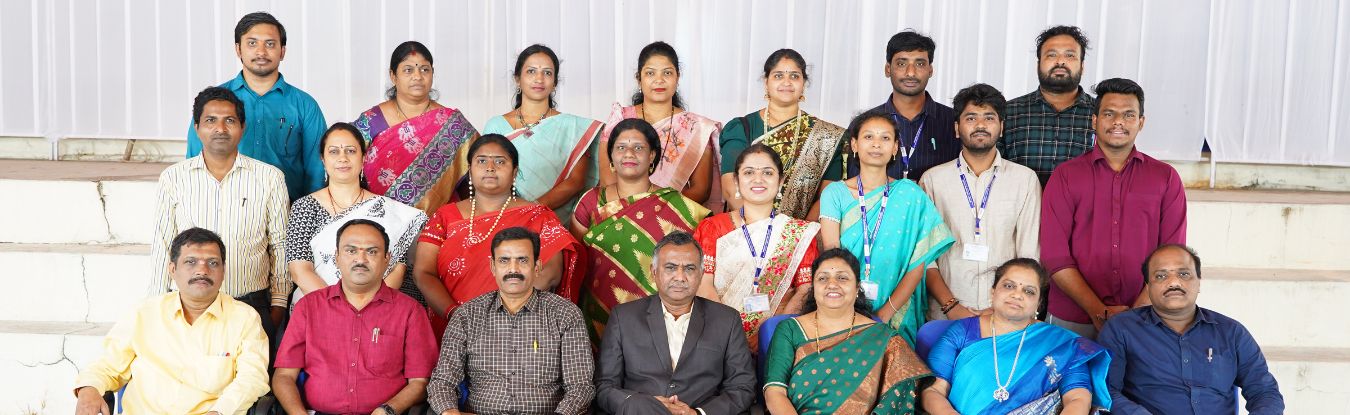
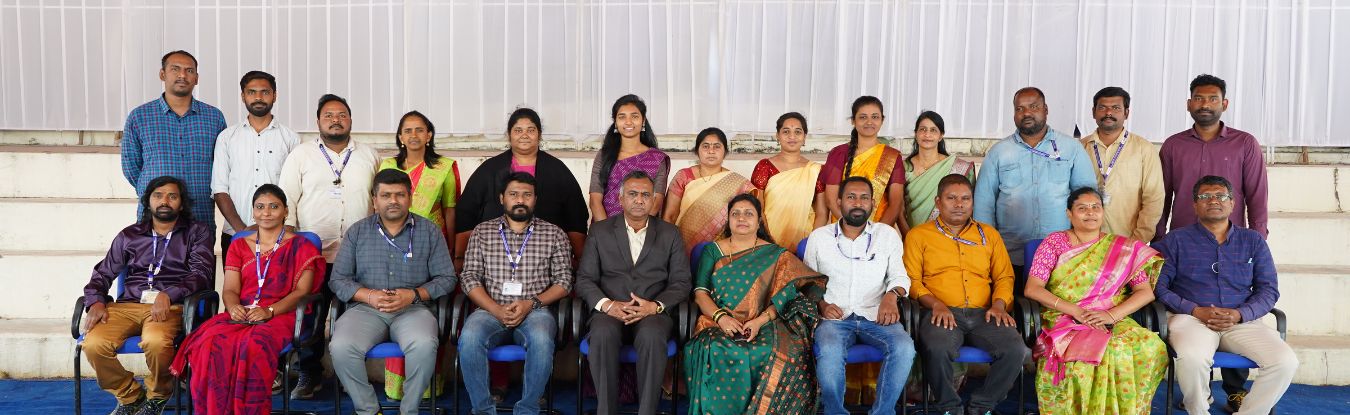
The Computer Science Department has been an integral part of the college since its inception. The department inspires students understand and write their own programming successfully, by conducting many seminars, workshops, value-added courses and guest lectures by prominent industry experts. Computer Science is an inter-disciplinary course that helps students of various streams for their exponential growth in mobilizing them towards becoming industry-ready.

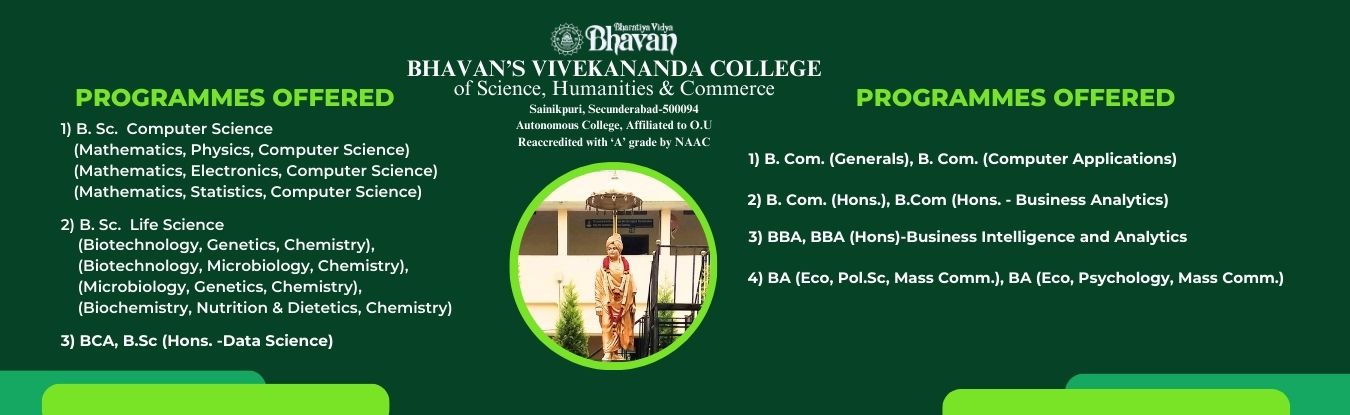
It began with one undergraduate course for B.Sc. (computers) and 2 faculties. However, as on today, the department purveys B.Sc.(Physical Sciences), BCA, B.Com( Computers ), B.Sc.(Hons) in Data Science and M.Sc. (CS). The Department staff has now grown to have 45 dedicated staff and caters to more than 3,350 students from a modest beginning of 30 students.

Faculty Awards/Achievements


Dr. K.V.B. Saraswathi has successfully completed her PhD.
Dr. Ramana has successfully completed his PhD.
Dr. G. Mahesh Kumar has successfully completed his PhD.
Dr. S. Jayalaxmi has successfully completed her PhD.
Mr. P. Srinivasa has qualified UGC-NET 2024.
Ms. S. Bhuvaneshwari has qualified UGC-NET 2024.

Dr. S. Jayalaxmi:
  • Resource person for online Webinar Conducted by CRDE (Mumbai) on occasion of International Women's day celebrations Topic: Celebrating the contribution of female educators past present and future perceptive.

  • Resource person for Digital Poster & video making workshop in IIMC Hyderabad 12th September 2023.


Student Awards/Achievements


  • Tushar Shah, T Vikas and P. Manasa of MSc computer science have qualified UGC-NET 2024.

  • Vignesh of BCA IV SEM was awarded with Nandi and Best Talent Award in UGADI PURASKARALU NANDI-2024.

  • Moses Andrew, Rahul Saraf of B.Sc won 1st Prize in Online Road Assistant Android Projects in National Science Day.

  • Mohammed Abdul Ahad, G.Bhaskar, Mohammad Arshad of B.Sc won 2nd Prize in Newsiverse Android Projects in National Science Day.

  • B.Manikanta, T.Akansha of B.Sc won 1st Prize in Career Hub in Website in National Science Day.

  • Chebrolu Ravi Teja of B.Sc won 2nd Prize in Income Certificate in Website in National Science Day.

  • Kasi Viswanth, Y. Vishnav of BCA won Special Prize in National Science Day.

  • Manogna Bedadakota, Sidharth Nahata of BSc HDS won Ist Prize in Tech Exhibit in Technophilia 3.O 2024.

  • Aruna kumari of BCom won Ist Prize in Blind Script in Technophilia 3.O 2024.

  • Manikanta, Rishi Shankar of BSc won Ist Prize in Hardware Hive in Technophilia 3.O 2024.

  • Faaziyah Nargis, Dongala shravani, Cara Maria Roma Ravikanth of BCA won Ist Prize in Tech Trove in Technophilia 3.O 2024.

Publications

Sl. No. Name of the teacher Title of the book published Text Book Year of publication with month ISBN number
1 Mrs. N.Sharon Rosy
Mrs. B.Vijetha
Mrs. J.Lakshmi Vydehi
Operating System Concepts Text Book 2024(July ) ISBN: 978-93-5840-925-3
2 Mrs. M. Amitha
Mrs. B. Divya Rekha
Mr. Saumesh Routray
Data Base Design Text Book 2024(July) ISBN:978-93-5840-154-7
3 Mrs. B.Vijetha
Mrs N.Sharon Rosy
Mr. Houston Ivan Moses
Java Programming Text Book 2024(July ) ISBN: 978-93-5840-872-0
4 Dr. S. Jayalaxmi E-commerce And Web designing Text Book 2024(June) ISBN:978-81-969070-3-7
5 Mrs.V.Sreeprada
Mrs.J.Lakshmi Vydehi
Applications Of AI Text Book 2024(September) ISBN:978-93-93622-60-0
6 Dr. S.Ramana
Dr. G.Mahesh Kumar
AI and Its Application Text Book 2024(September) ISBN:978-93-93622-75-4
7 Mrs. Padmapriya
Mr. Jalaj Kumar Panday
Mr. D Ganesh Kumar
Unix Programming TextBook 2024(October) ISBN:978-93-6440-590-4
8 Mr. K.srinivasa Rao
Mr. Ch.N.V.Mallikarjuna Rao
Web technology TextBook 2024(October) ISBN:978-93-5840-297-1
9 Dr.N.Bhaskar
Mrs. J.Lakshmi Vydehi
Machine Learning Algorithm using Random ForestAlgorithm for Data Analysis” Journal 2024(September) ISBN:1012-3407
 ..

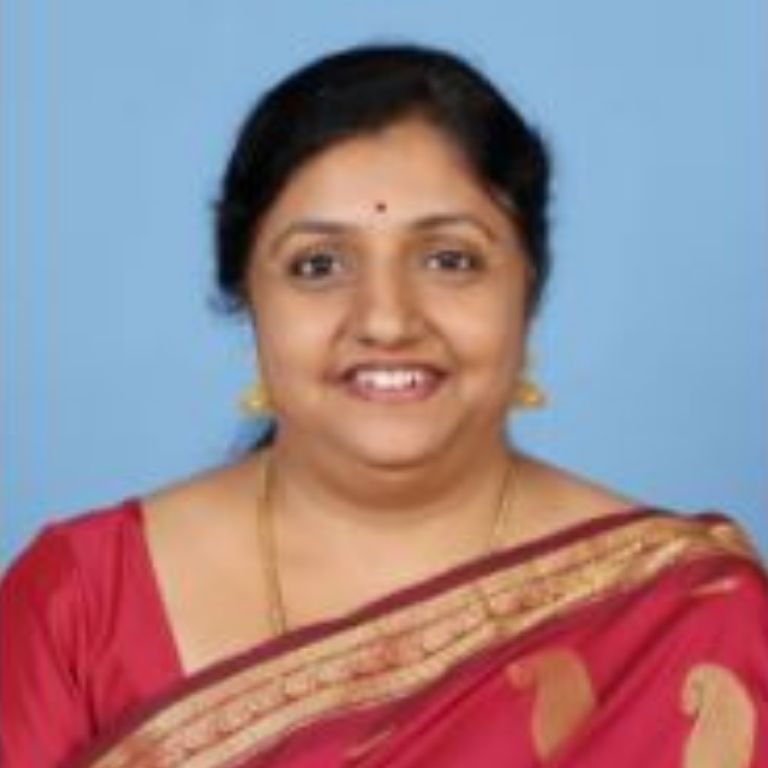
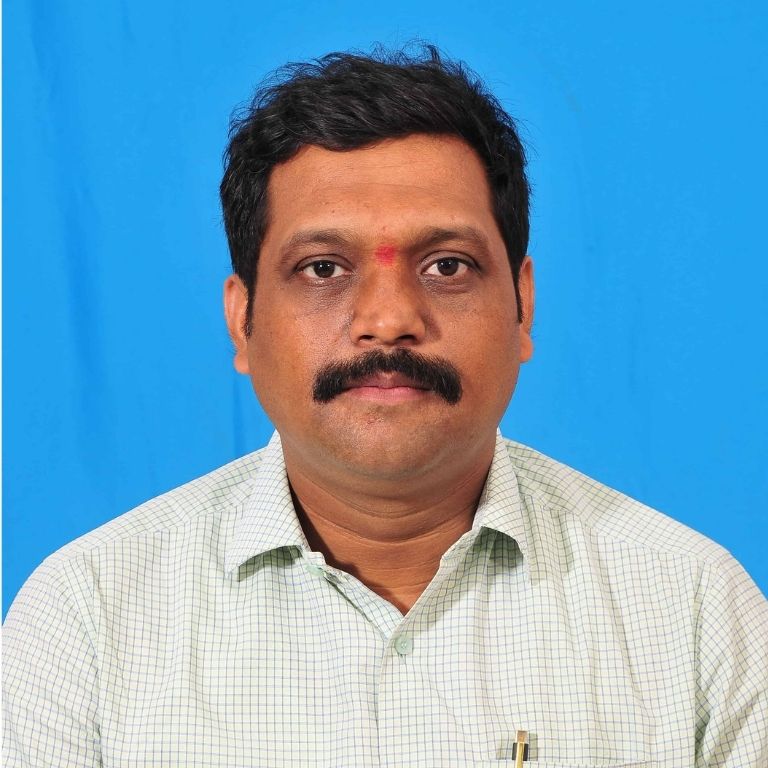
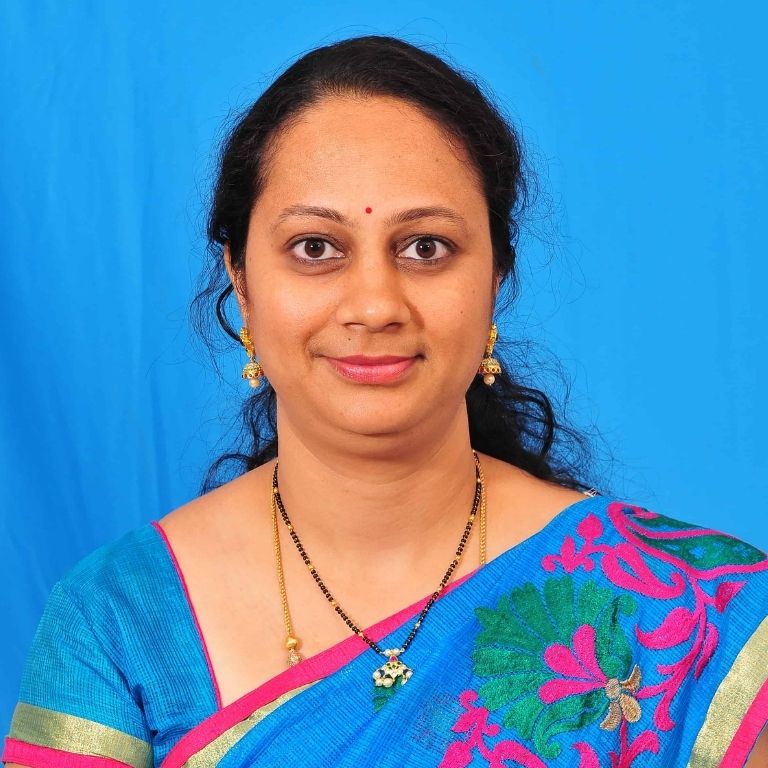
Dr. K. V. B. SARASWATHI

Head of the Department

Vidwan Link: Click here

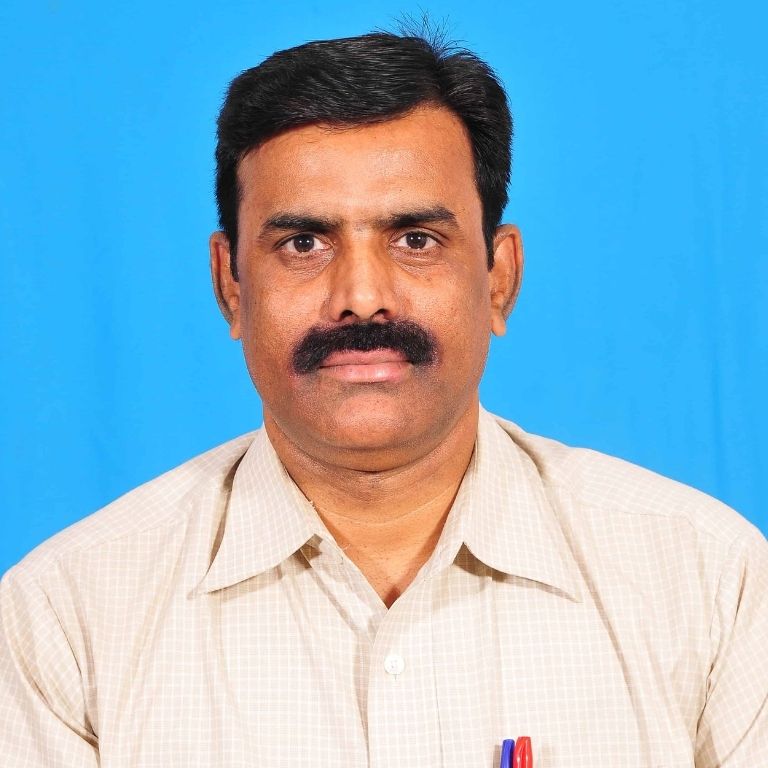
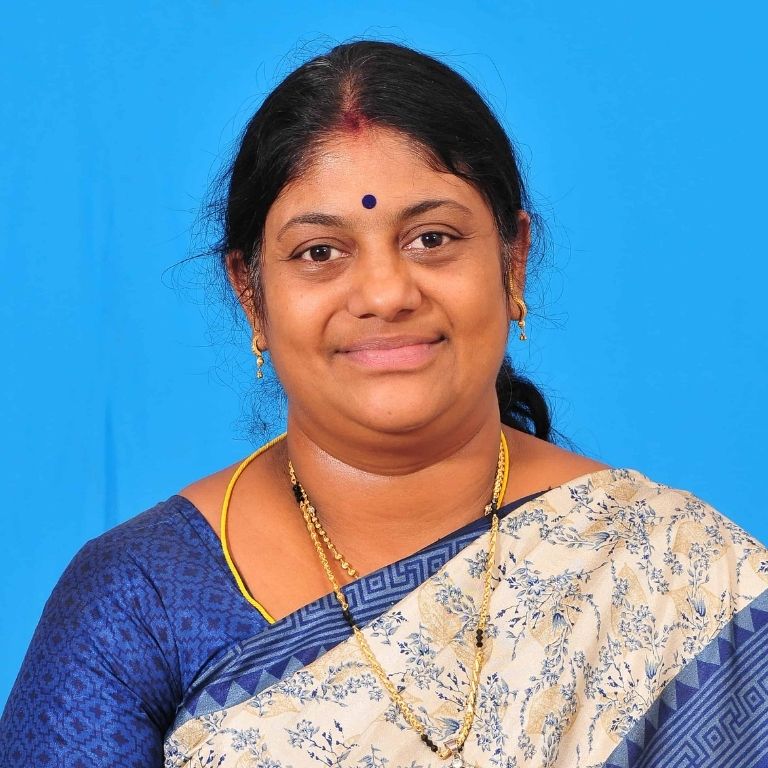
Mr. K. SRINIVASA RAO

M.Sc.(CS) Course Coordinator

Vidwan Link: Click here

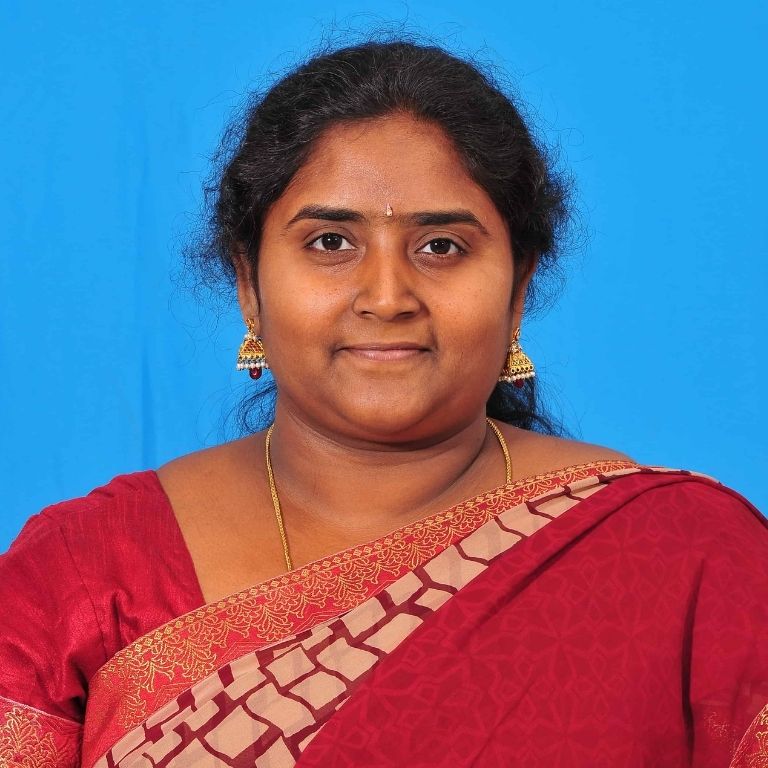
Dr. K. PADMA PRIYA

Assistant Professor

Vidwan Link: Click here

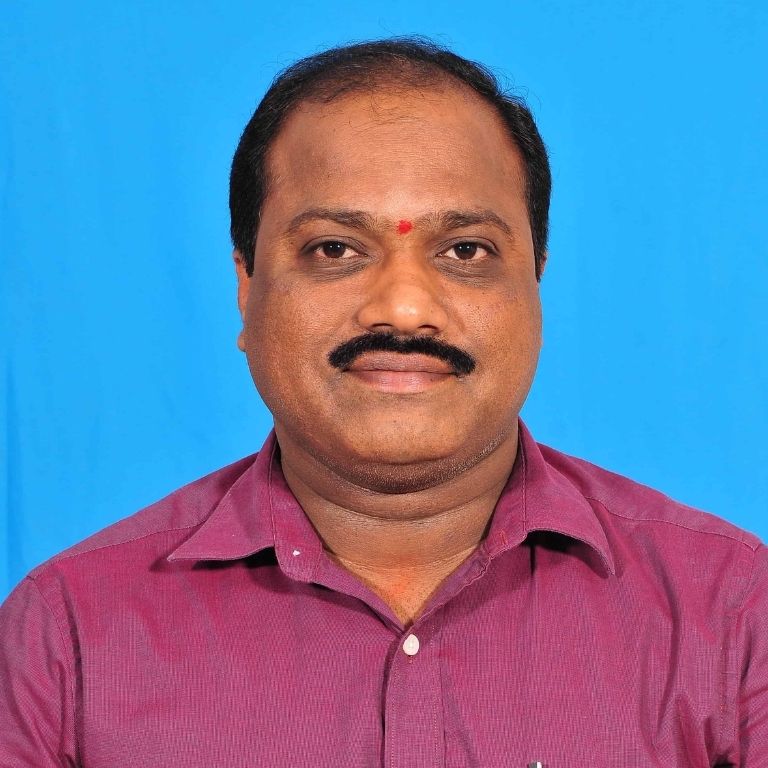
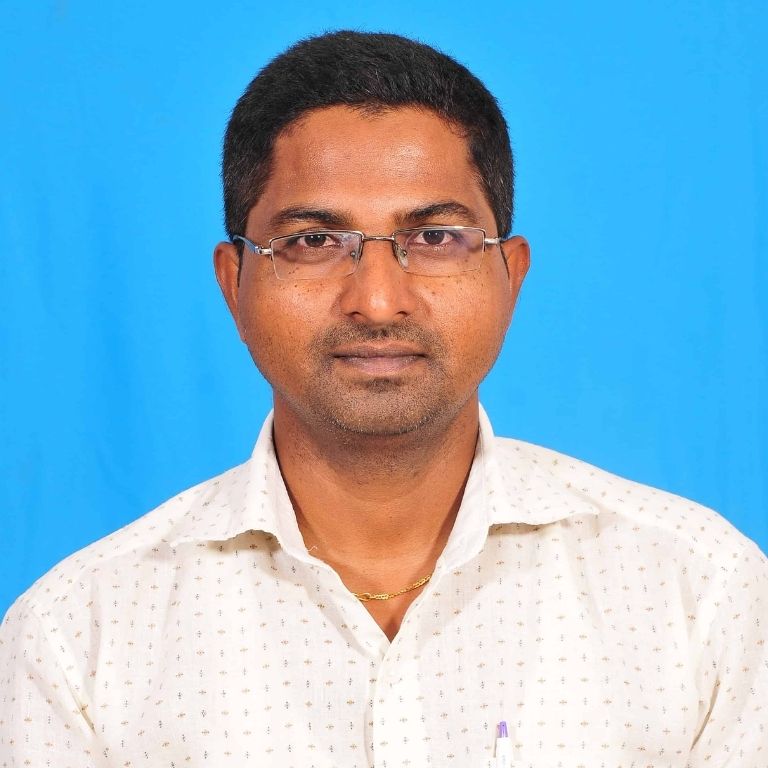
Dr. S. RAMANA

Controller of Examination(COE)

Vidwan Link: Click here

Dr. G. MAHESH KUMAR

B.C.A Course Coordinator

Vidwan Link: Click here

Mr. CH. N. V. MALLIKHARJUNA RAO

Lecturer

Vidwan Link: Click here

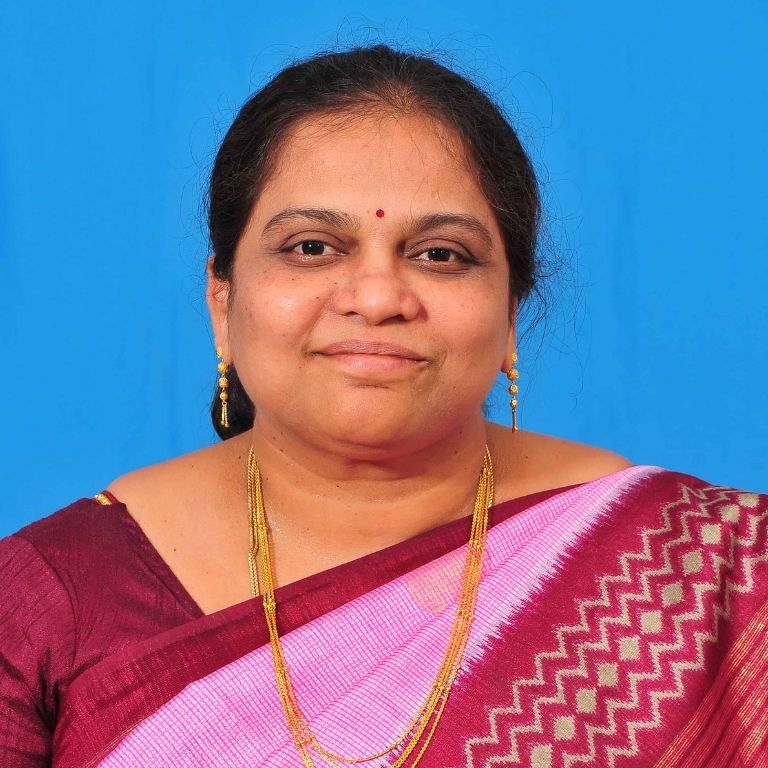
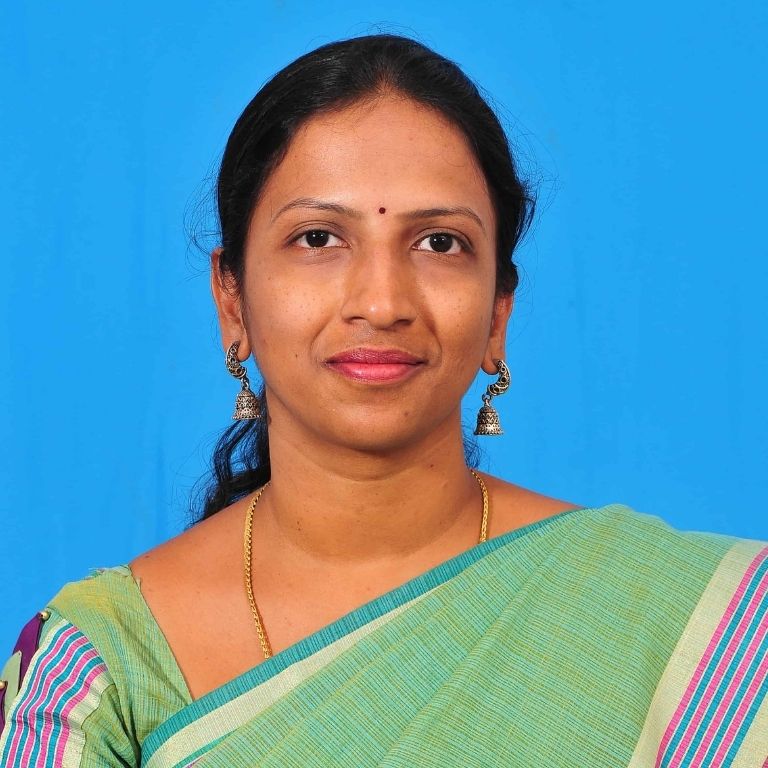
Dr. S. JAYALAXMI

Assistant Professor

Vidwan Link: Click here

Ms. B. DIVYA REKHA

Lecturer

Vidwan Link: Click here

Mr. P. SRINIVASA

Lecturer

Vidwan Link: Click here

Ms. M. AMITHA

Lecturer

Vidwan Link: Click here

Ms. SHARON ROSY

Lecturer

Vidwan Link: Click here

Ms. B. VIJETHA

Lecturer

Vidwan Link: Click here

Mr. SAUMESH ROUTRAY

Lecturer

Vidwan Link: Click here

Mr. JALAJ KUMAR PANDEY

Lecturer

Vidwan Link: Click here

Dr. V.SREEPRADA

Lecturer

Vidwan Link: Click here

Mr. D. Ganesh kumar

Lecturer

Vidwan Link: Click here

Mr. T. Santhosh

Lecturer

Vidwan Link: Click here

Mrs. Haritha

Lecturer

Mr. K. Ganesh

Lecturer

Vidwan Link: Click here

Ms.Shamantula Bhuvaneshwari

Lecturer

Vidwan Link: Click here

Mr. Tushar Shah

Lecturer

Vidwan Link: Click here

Ms. P.Manasa

Lecturer

Mr. T. Vikas

Lecturer

Mr. K. Srikanth

Lecturer

Network Adminstrators
S.No ID Faculty Qualifications Designation Email
1 TS226 Mr. G. SRINIVASA RAO SDE(CSE), MSCE Network Adminstrator gsrinivasarao.cs@bhavansvc.ac.in
2 TS333 Mr. P. ABHAY KUMAR M.Sc(CS), CCNA Network Adminstrator abhay.cs@bhavansvc.ac.in
Exam Branch Programmers
S.No ID Faculty Qualifications Designation Email
1 TS171 Mr. I. RAJA KUMAR M.Sc(IT) Programmer rajkumar.cs@bhavansvc.ac.in
2 TS196 Mr. V. RAJESH MCA Programmer rajesh.cs@bhavansvc.ac.in
3 TS200 Mr. J. MADHU BABU B Tech Programmer madhubabu.cs@bhavansvc.ac.in
4 TS223 Ms. E. VIJAYA KUMARI MCA Programmer vijayakumari.cs@bhavansvc.ac.in
5 TS236 Mr. A. NAVEEN KUMAR B.Sc, (MCA) Programmer naveenkumar.cs@bhavansvc.ac.in
Programmers
S.No ID Faculty Qualifications Designation Email
1 TS269 Ms. J. SREEDEVI MCA Programmer sreedevi.cs@bhavansvc.ac.in
2 TS329 Mr. AH. SANDEEP MCA Programmer sandeep.cs@bhavansvc.ac.in
3 TS331 Ms. M. SUMALATHA M.Com Programmer sumalatha.cs@bhavansvc.ac.in
4 TS332 Mr. K. CHENNA KRISHNA MCA Programmer Ckrishna.cs@bhavansvc.ac.in
5 TS344 Ms. P. PUSHPALATHA MCA Programmer pushpalatha.cs@bhavansvc.ac.in
6 TS345 Mr. L. NARSING RAO M.Sc, M, Tech Programmer narsingrao.cs@bhavansvc.ac.in
7 TS278 Mr. R. MANOHAR B.SC(MPCs) Programmer manohar.cs@bhavansvc.ac.in
8 TS504 Mr. J. RAKESH B.Com(Gen) Programmer rakesh.j.cs@bhavansvc.ac.in
9 TS520 Ms. MANGA KALYANI B.TECH Programmer kalyani.cs@bhavansvc.ac.in
10 TS522 Ms. NUTHAN GUPTA MCA Programmer nuthangupta.cs@bhavansvc.ac.in
11 TS523 Ms. BIBHAK RAJITHA B.TECH Programmer rajithareddy.cs@bhavansvc.ac.in
12 TS527 Mr. A RAVI KUMAR MCA Programmer ravikumar.cs@bhavansvc.ac.in
13 TS551 Mr. GUNDE SHIVA B.Com(General) Programmer shivajohn243@gmail.com
14 TS553 Ms. G. DHANALAXMI M.Sc(CS) Programmer dhanalaxmigunda957@gmail.com

Star DBT Activities Click here
Activities 2025-26

Generic placeholder image
3
Jan
Cyber Security in the Age of AI

The workshop was organized with the objectives of introducing students to the fundamentals of cyber security, creating awareness about cyber threats and ethical hacking, and demonstrating real world cyber attack scenarios to encourage secure digital practices. Mr. Srinivas delivered an intensive and practice oriented session that effectively integrated theoretical concepts with live demonstrations, aligning with the learning needs of the Undergraduate audience.
The workshop commenced with an introduction to cyber security as a distinct discipline, wherein the speaker clarified the difference between conventional computer science and cyber security and emphasized its growing importance in the age of artificial intelligence. He then discussed different categories of hackers and commonly observed cyber-attacks, followed by an explanation of core networking concepts such as IP addressing and DNS to provide the necessary technical foundation.
The technical sessions focused on web and application security topics, including Google hacking, SQL Injection, Cross-Site Scripting (XSS), mobile security, and phishing attacks. Live demonstrations of SQL Injection and XSS were conducted to show how insecure web applications can be exploited, and various command-line utilities and forensic tools were demonstrated to give students hands-on exposure to security testing and investigation techniques.
In the concluding part of the programme, the resource person discussed digital forensics and phishing techniques, explaining how attackers combine technological loopholes with social engineering to compromise systems and users. The importance of ethical and responsible cyber practices was repeatedly emphasized, with reference to legal and professional obligations while working in the cyber security domain.
By the end of the workshop, students were able to distinguish between computer science and cyber security, identify different types of hackers and cyber-attacks, and explain IP addressing, DNS, and common web vulnerabilities. They gained a clearer understanding of SQL Injection and XSS through live demonstrations, and developed awareness of phishing, mobile hacking, and digital forensics, thereby improving their practical understanding of cyber risks, security vulnerabilities, and appropriate preventive measures.
Generic placeholder image
19-20
Dec
Two Day Workshop on Networking & Simulation

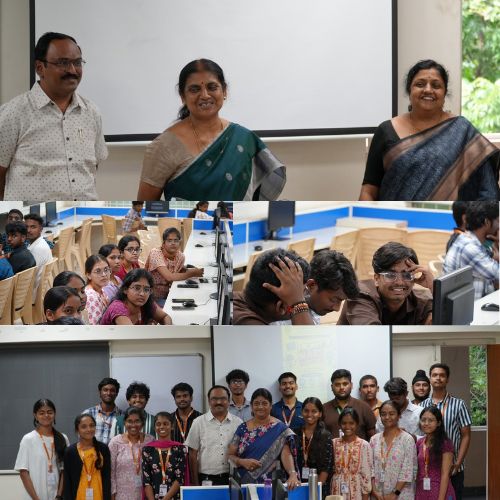
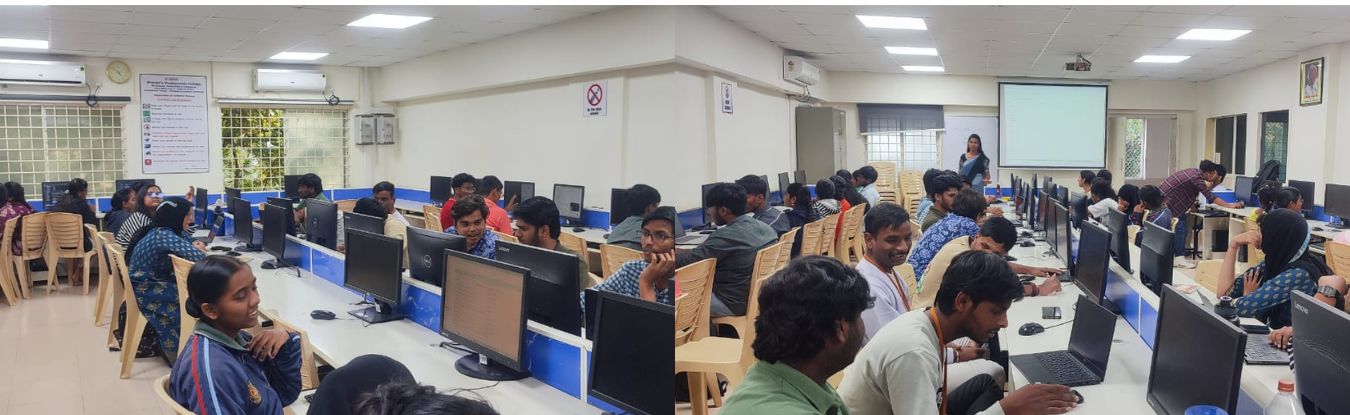
The Department of Computer Applications organized a two-day workshop- Networking & Simulation on 19th and 20th December 2025. The workshop was conducted by Mr. Houston Ivan Moses, Network Engineer, DataCipher Pvt. Ltd., who provided expert guidance on both theoretical and practical aspects of computer networking. A total of 51 students from BCA and B.Sc. (HDS) II Years registered and actively participated in the program. The primary objective of the workshop was to equip students with a strong foundation in computer networking concepts along with hands-on experience using Cisco Packet Tracer. The sessions covered essential topics such as network models, IP addressing, network topologies, VLANs, and routing protocols through a balanced combination of theory and practical implementation. Students gained practical exposure in configuring routers and switches, establishing network connectivity, and troubleshooting real-time scenarios. Overall, the workshop was well received and proved to be highly beneficial in enhancing students’ technical skills and understanding of real-world networking applications.
Generic placeholder image
26-6
Nov-Dec
Knowledge Sharing Programs

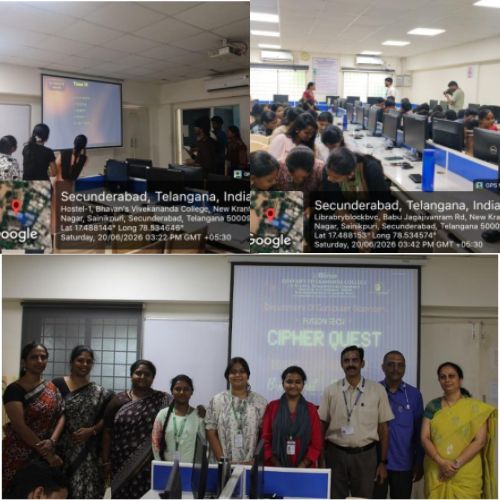
The Department of Computer Science organized a series of Knowledge Sharing Programs from 26 November 2025 to 6 December 2025 at the Library Block in N21A, N21B, N21C aimed at enhancing practical skills, peer learning, and exposure to emerging technologies among undergraduate students. Senior students guided juniors through structured, interactive, and hands-on sessions on Prompt Engineering, Graphics using C, and Advanced Web Development.
The Prompt Engineering Program introduced students to effective prompt design and modern AI workflows. Participants learned structured prompting techniques, persona-based design, iterative refinement, and multi-step reasoning methods, along with responsible AI practices. The sessions concluded with practical application through AI-assisted planning, development, and project discussions.
The Graphics using C Program focused on the fundamentals of computer graphics using the C language. Students learned to initialize graphics mode, draw basic shapes, work with text and colors, and implement simple graphical programs. Continuous hands-on practice helped improve logical thinking, creativity, and confidence in graphics programming.
The Advanced Web Development Course provided training in current web technologies, covering HTML structure, CSS styling and responsiveness, JavaScript interactivity, development tools, backend integration, UI/UX principles, and website deployment. Emphasis was placed on real-world workflows, clean design, and performance optimization.
Overall, the Knowledge Sharing Programs successfully fostered collaborative learning and practical exposure, strengthening students’ technical abilities and preparing them for academic projects and future professional requirements.
Generic placeholder image
15-20
Sep
ATAL FDP 2025-2026 - Cloud Technology

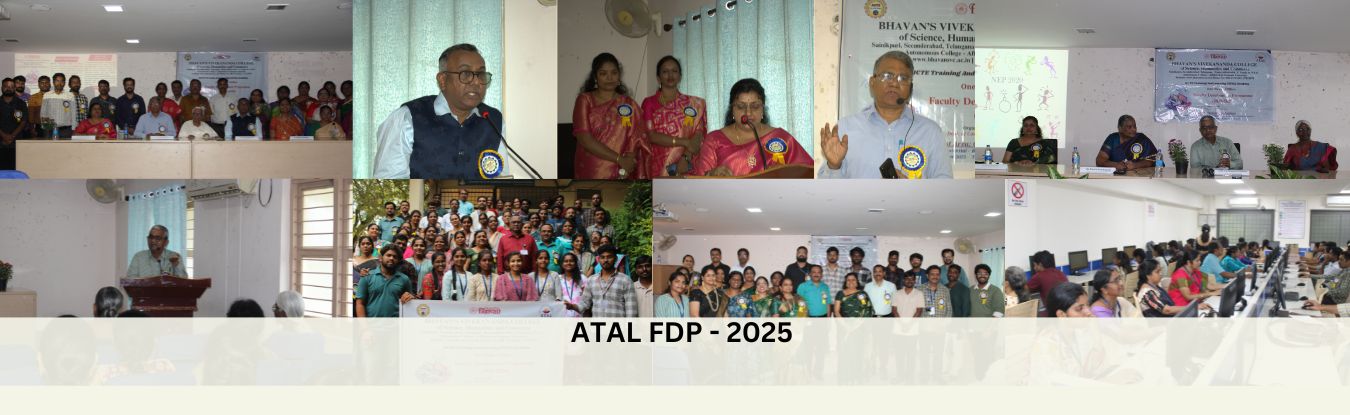
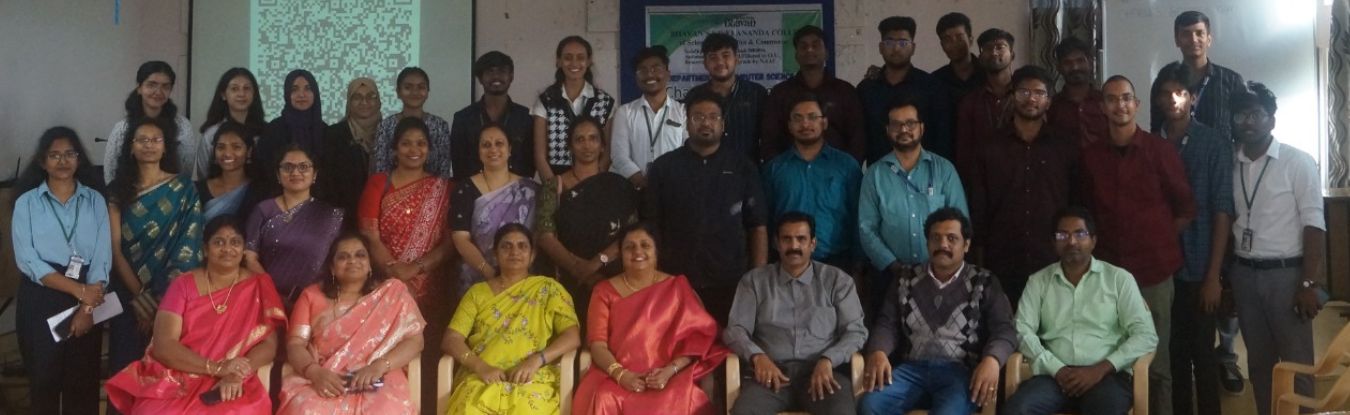
The Department of Computer Science inaugurated a One-Week AICTE sponsored AICTE Training AndLearning(ATAL) Faculty Development Programme (FDP) in offline mode on 15th September 2025, which will continue until 20th September 2025. The programme commenced at 9:00 AM with a formal inaugural session that included the lighting of the lamp by Air Cmdre (Retd.) J.L.N. Sastry, Vice Chairman, BVB Kendra, Sainikpuri, along with Dr. G.S.V.R.K. Choudary, Principal Bhavan’s Vivekananda College of Science, Humanities and Commerce, Chief Guest and Speaker of Session I, Prof. S. Ramachandram, Former Vice-Chancellor of Osmania University and Anurag University, Dr. KVB Saraswathi, Head, Department of Computer Science and the HoD’s of various Departments. The event began with Bhavan’s prayer, followed by greetings from the Vice Chairman, the Principal, and the Chief Guest. They focussed on the changing technology and how we as Faculty and Research Scholars should adapt ourselves to this rapidly changing technology and the role to be played by Faculty not just as teachers but also as mentors and guides.
Generic placeholder image
18-23
August
AWS with DevOps

The Department of Computer Science organized a six-day intensive training program on “AWS with DevOps”, in collaboration with NASSCOM and Brain O Vision Solutions India Pvt. Ltd., from 18th August 2025 to 23rd August 2025. The sessions were conducted in the Library Block from 10:00 AM to 4:30 PM.
The training aimed to provide postgraduate students with hands-on exposure to Amazon Web Services (AWS) and DevOps tools—two of the most in-demand skill sets in the IT industry. This workshop bridged theoretical knowledge with real-world implementation practices in cloud-based application deployment, infrastructure automation, and continuous integration and deployment (CI/CD).
The sessions were facilitated by Mr. V. Pavan, a Senior Corporate Trainer, Full Stack Developer, and AI & Cloud Specialist from Brain O Vision, an organization recognized by NASSCOM for industry-driven technical training.
Generic placeholder image
7-11
July
Canva Workshop

A five-day Canva Workshop was successfully conducted to empower students with creative design skills using the Canva platform. The sessions introduced participants to the essentials of graphic design, content creation, visual branding, and presentation design. The workshop followed a progressive structure, balancing foundational concepts with hands-on tasks, ensuring both offline and online attendees received equal value.
Generic placeholder image
30-5
June-July
Bridge Course for Undergraduate First Year Students

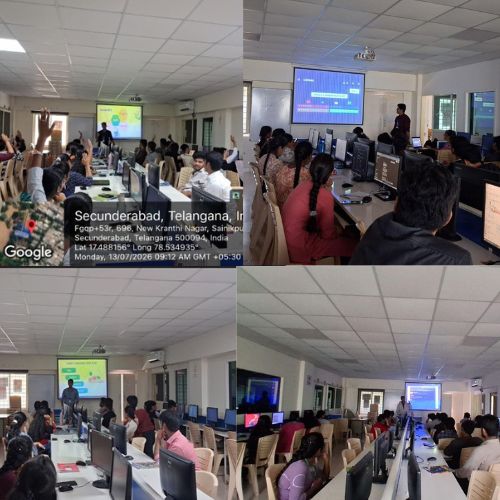
The Department of Computer Science successfully conducted a Bridge Course for first-year undergraduate students from 30th June 2025 to 5th July 2025, aimed at bridging the gap between students' diverse educational backgrounds and essential IT-related concepts required for their academic journey ahead. A total of 190 students actively participated in the program, which was delivered in a hybrid mode (both online and offline) to ensure accessibility for all attendees.
Course Modules Covered:
  • Day 1: Digital You: Personality & Web Fluency
  • Day 2: Keys to Success: Mastering Typing Skills
  • Day 3: Tech Starters: Foundation of Computing
  • Day 4: Mind Craft: Building Logical Thinking
  • Day 5: Compute the Logic: Mathematical Essentials

  • Each session was designed to be interactive and activity-oriented, ensuring students could grasp core concepts effectively while developing critical digital skills. The program concluded with a special session on IT Hardware Essentials, followed by a valedictory program that acknowledged the enthusiastic participation of students and the dedicated efforts of the organizing committee and resource persons from the department. This bridge course successfully laid a solid foundation for students to embark on their undergraduate studies in Computer Science with increased confidence and essential technical fluency.